Leak detection and repair on pipes and water lines to prevent mould, rot and costly water damage.
4.8 / 5 GoogleUrgence 24/7Montreal et region
+110 avis verifies
Planned repairs, pipe replacement, and supply line work by licensed plumbers.
Not every pipe problem is a crisis. Some are discovered gradually: a slow drip that's been there for months, a pinhole in a copper line found during a renovation, a galvanized supply line that's flaking rust into the water, or a pressure drop that points to a deteriorating pipe somewhere in the system. These are the situations where a well-planned repair or replacement is the right answer, not an emergency callout.
Plomberie 5 Etoiles handles the full range of planned water line and pipe repair work across Montreal, Laval, the South Shore, and the North Shore. We assess what you have, explain the options clearly, and complete the work to code with transparent pricing before we start.
RBQ Licensed (#5663-4538-01) · CMMTQ Member · CAA-Quebec Recommended · 4.8 Stars, 150+ Google Reviews
Well done guys, they've earned their 5 stars
My kitchen sink wasn't flushing despite the underneath pipes being clean. My basement toilet was out of order. I called them at 9:30am, the man clearly explained the fees wit…
Great camera inspection, even earlier than scheduled. Very friendly and gave clear explanations of the work. I truly recommend them. My plumber was Zoiubir. Thanks to Alex.
Copper has been the dominant supply pipe material in Montreal homes since the 1950s. It is durable and performs well, but it has well-documented failure modes. Pinhole leaks caused by internal corrosion are the most common. In Montreal homes, the combination of water chemistry, pipe age, and the presence of dissimilar metals in older systems accelerates pitting in copper over time.
When a single section is failing, targeted repair is usually the right approach: cut out the damaged section, replace it with new copper or a code-compliant fitting, solder or press the connection, and pressure-test. This is a same-day repair in most accessible locations.
When multiple pinholes have appeared in different locations, or when the pipe was installed in a low-quality alloy common in the 1970s and 1980s, the more cost-effective path is a section or zone replacement rather than chasing individual failures.
Galvanized Steel Pipe Replacement
Galvanized steel supply lines are found in Montreal homes built before approximately 1960. Galvanized pipe corrodes from the inside out. The rust scale that builds up inside the pipe reduces water pressure progressively over years, discolours the water, and eventually causes the pipe wall to fail. By the time a galvanized pipe shows a leak, the internal condition throughout the system is usually poor.
In most cases, we do not patch galvanized pipe. We replace it. The replacement material depends on the application and access: copper for exposed runs or high-pressure lines, PEX for concealed routing through walls and joists where flexibility reduces fittings and joint count.
Signs that galvanized pipe needs replacement rather than repair:
Rust-coloured water at first draw, particularly after the water has sat in the pipes overnight
Significantly reduced pressure compared to neighbouring properties or to what it was years ago
Multiple leaks in different locations over a short period
Visible external corrosion on exposed pipe sections in the basement
PEX Supply Line Installation
PEX (cross-linked polyethylene) has largely replaced copper and galvanized steel in new residential construction in Quebec and across Canada. It has two key advantages for replacement work in existing homes.
First, it is significantly more flexible than copper or steel, which means it can be routed through walls, floor cavities, and joists with far fewer fittings and joints. Fewer joints means fewer potential failure points.
Second, PEX does not corrode. In Montreal homes where the water chemistry has been aggressive enough to pit copper pipe, PEX eliminates the root cause of the failure.
PEX is available in three grades (PEX-A, PEX-B, PEX-C), each with slightly different connection methods and flexibility characteristics. We select the appropriate grade and connection system for the specific application and ensure all work meets the Quebec plumbing code requirements under the current edition of the Plomberie (installation and connections) regulation.
PEX is not appropriate for every application. It cannot be used outdoors or in locations exposed to UV light, and some condo building regulations specify approved materials for in-unit work. We confirm material suitability during the assessment.
Supply Line Replacement Under the Sink or Behind Appliances
Braided stainless steel supply hoses connecting wall valves to faucets, toilets, dishwashers, and refrigerators have a service life of approximately 5 to 10 years depending on quality. Failure of these hoses under pressure releases water at the full supply rate, which can cause significant damage within minutes.
We replace supply hoses during appliance installations as standard practice, and we replace aged hoses during service calls when they show signs of wear: bulging, discolouration of the braiding, corrosion at the fittings, or visible rubber degradation at the bends.
Shut-Off Valve Replacement
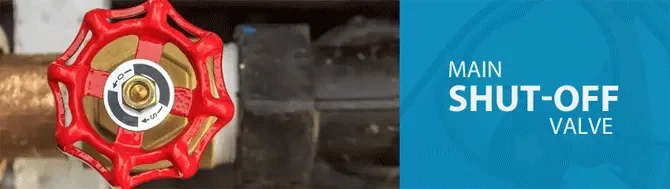
Shut-off valves seize over time when they are not operated regularly. A seized valve that cannot close during an emergency is a serious problem. We replace corroded or non-functional shut-off valves with new ball valves, which are more reliable than older gate-style valves and operate with a quarter-turn.
We add accessible shut-off valves to toilet, sink, and dishwasher supplies during work where none are present, which is common in older Montreal homes and duplexes where the original plumbing had no unit-level isolation.
Water Supply Line to the House (Service Line)
The supply line running from the city water main under the street to the foundation of your home is the most critical pipe in the system and the most often overlooked. In older Montreal homes, this line may be original to the house and may be made of lead (in homes built before approximately 1950), galvanized steel, or early copper. Lead service lines present a health concern and the City of Montreal has programs to assist with replacement.
Signs that the service line may need assessment or replacement:
Sudden unexplained loss of pressure throughout the house
Discoloured water affecting all fixtures simultaneously
Water visible in the basement near the point where the supply enters the foundation
A water meter that moves continuously even with all interior fixtures off
Service line replacement typically involves some excavation, either within the basement or outside depending on the line routing. See our main drain excavation page for more on what that work involves.
One of the most common questions we hear is whether a pipe problem is worth fixing or whether it makes more sense to replace more of the system at the same time. The answer depends on three things: the age and material of the surrounding pipe, the cost difference between a targeted repair and a broader replacement, and whether the access required for the repair can be used to accomplish more at the same time.
Targeted repair makes sense when:
The rest of the system is in good condition
The failure is isolated to a specific joint, fitting, or short section
The pipe material and age do not suggest further failures are likely in the near term
Access is straightforward and does not require significant wall or ceiling opening
Broader replacement makes sense when:
The same pipe system has failed in multiple locations within a short period
A camera inspection or visual assessment reveals widespread corrosion or deterioration
Access already requires significant opening of walls or ceilings (meaning the cost of accessing more pipe is marginal)
The home is being renovated and pipes are already exposed
We give you a straight assessment of which situation you are in, with the cost of each option, before any work begins.
Pipe Materials Used in Montreal Homes: A Quick Reference
Understanding what you have in your home helps you understand what we recommend and why.
Material
Typical era
Lifespan
Common failure mode
Lead
Pre-1950
Varies
Health risk, should be replaced
Galvanized steel
1920s-1960s
40-70 years
Internal corrosion, pressure loss, rust in water
Copper (type K/L)
1950s-present
50-70+ years
Pinhole leaks from pitting corrosion
Copper (thin wall/low grade)
1970s-1980s
20-40 years
Faster pitting, higher failure rate
Poly-B (polybutylene)
1978-1995
20-30 years
Fitting failure, chlorine degradation
CPVC
1980s-1990s
25-40 years
Brittleness, cracking at fittings
PEX
1990s-present
50+ years
Generally very low failure rate
Note on Poly-B: Polybutylene pipe was used extensively in residential construction in Quebec and across Canada from the late 1970s through the mid-1990s. It has a documented history of failure at the acetal plastic fittings, which degrade from contact with chlorinated water. If your home has Poly-B supply lines, consult with us about your options. It does not necessarily need to be replaced immediately, but a professional assessment is worth having.
What the Pipe Repair or Replacement Process Looks Like
1. Assessment. We inspect the affected pipe or system, identify the failure mode, and assess the condition of the surrounding plumbing. For hidden pipe problems, we may use camera inspection or smoke testing to locate the source before opening walls.
2. Options presented. We explain the targeted repair option, the broader replacement option if applicable, the materials involved, and the pricing for each. You choose.
3. Access. We open the minimum area required to reach the pipe. Where wall or ceiling access is needed, we make clean cuts that simplify the patch work for your finisher.
4. Pipe work. The repair or replacement is completed to code, pressure-tested before closing up, and documented.
5. Code compliance. All work requiring a permit is permitted. All connections are inspected and tested. On request, we provide written documentation of the work for your records, insurer, or condo board.
Among the top three plumbers according to Three Best Rated
Why Choose Plomberie 5 Etoiles for Pipe Repair and Water Line Work
We tell you what you actually need, not the most expensive option. A pinhole in an otherwise healthy copper system does not need a whole-house repipe. We assess the real condition of your pipes and give you an honest recommendation.
All work is code-compliant and documented. RBQ license #5663-4538-01. CMMTQ member. Permits pulled when required. Written documentation on request.
15 years in Montreal's housing stock. We have replaced galvanized pipe in Verdun bungalows, repaired copper systems in NDG houses, installed PEX in Plateau triplexes, and assessed Poly-B systems in Laval homes from the 1980s. We know what's in the walls before we open them.
CAA-Quebec recommended for 10+ years. Verified service quality every year.
Transparent pricing confirmed before work begins. Always.
If you notice a water leak, it is important to act quickly. Shut off the main water supply if possible and contact a professional plumber immediately. Quick action helps minimize water damage to your property.
Yes. We offer emergency plumbing services for water leaks, including evenings and weekends. Our team responds quickly to help stop the leak and prevent further damage.
Common signs include higher-than-normal water bills, damp spots on walls or ceilings, mold or mildew запахs, reduced water pressure, or the sound of running water when no fixtures are in use.
We can help identify the general source of a leak and perform necessary plumbing repairs. However, we limit opening walls or floors and may recommend a specialized leak detection or renovation contractor for complex situations.
Our standard plumbing service starts at $300 plus tax, which includes travel time and the first hour of work. Additional time is billed at $90 plus tax per 30 minutes. Final cost depends on the complexity of the repair.
Yes. Even a small leak can lead to significant damage over time, including mold growth, structural issues, and damage to floors, walls, and cabinets. It is always best to address leaks as soon as possible.
We repair most residential plumbing leaks including pipes, fittings, valves, and fixtures. For major excavation or underground line repairs, we may refer you to a specialized contractor.
Yes. We provide water leak repair services in Montreal, Laval, Longueuil, Brossard, Terrebonne, Blainville and throughout the greater Montreal area. Call 514-447-3700 to schedule a service.
Both are appropriate for supply line replacement in Quebec. PEX has fewer joints for long runs, does not corrode, and is easier to route through existing wall cavities, which reduces labour cost. Copper is preferred in some applications where high heat or UV exposure is a concern, and some condo buildings specify approved materials for in-unit work. We recommend based on your specific situation.
 4.8 / 5 Google
 +110 avis verifies