Video pipe inspection to locate cracks, bellies and blockages without unnecessary digging.
4.8 / 5 GoogleUrgence 24/7Montreal et region
+110 avis verifies
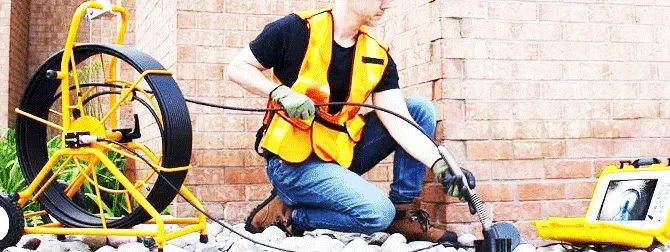
A drain camera inspection removes all guesswork from drain diagnosis. Instead of opening walls, cutting concrete, or relying on assumptions about what's causing a problem, a high-definition camera is fed directly into the drain pipe and transmits a live video feed of the interior. Our technicians interpret the footage in real time, explain what they see before leaving your property, and give you a clear recommendation — whether that's a cleaning, a targeted repair, or something more involved.
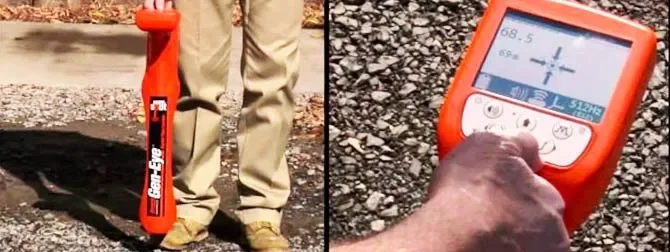
What makes our system different: Our drain cameras are integrated with a GPS locator device that pinpoints the exact surface position of any problem found inside the pipe — within inches. This means targeted repairs instead of exploratory excavation.
Available in Montreal, Laval, the South Shore, and the North Shore.
Well done guys, they've earned their 5 stars
My kitchen sink wasn't flushing despite the underneath pipes being clean. My basement toilet was out of order. I called them at 9:30am, the man clearly explained the fees wit…
Great camera inspection, even earlier than scheduled. Very friendly and gave clear explanations of the work. I truly recommend them. My plumber was Zoiubir. Thanks to Alex.
A camera inspection isn't only for emergencies. It's one of the most useful preventive tools a Montreal homeowner can use — and several situations make it the obvious first call.
Recurring Clogs in the Same Drain
If a drain keeps blocking despite regular cleaning, the problem isn't what's going down it — it's the condition of the pipe itself. A drain that backs up two or three times a year on the same line almost always has a structural cause: corroded cast iron with a rough interior surface that catches everything, a bellied section where water pools and debris accumulates, a separated joint creating a step inside the pipe, or root intrusion growing back after each cleaning. Cleaning without inspecting treats the symptom. Inspection identifies the cause.
Before Buying a Home
This is one of the most important uses of a drain camera — and one of the most underused by Montreal home buyers. A standard building inspection doesn't go inside the drains. It can't see the condition of the main drain, the lateral connection between the house and the city sewer, or a French drain under the slab. A hidden plumbing defect in an older Montreal home can cost thousands to correct after purchase — sometimes more than what a negotiated price reduction would have saved.
We offer a dedicated plumbing home inspection service built specifically for real estate transactions, with a same-day written report.
Before Basement Renovations or Excavation
If you're planning a basement renovation, a backwater valve installation, a sump pit, or any landscaping that involves excavation near the house, a camera inspection beforehand maps the exact location and depth of your main drain. This prevents the kind of costly surprises that only appear once a contractor is already in the ground.
Mysterious Odours with No Visible Source
A sewer smell in the basement, bathroom, or kitchen with no apparent blocked drain usually points to a dry trap, a failed drain gasket, or a crack in the stack letting sewer gas escape. The camera locates the source in minutes where a visual inspection can't reach.
Intermittent or Seasonal Backups
A drain that backs up occasionally — during heavy rain, spring snowmelt, or randomly — often points to a problem in the lateral line between the house and the street: a bellied section, partial root obstruction, or a diameter reduced by years of sediment buildup. The camera confirms the exact cause before you invest in cleaning, a backwater valve, or pipe repair.
After Purchasing an Older Home
If you've recently bought a home built before 1980 in Montreal — a duplex in Rosemont, a house in NDG, a triplex on the Plateau — a camera inspection within the first year is solid preventive practice. Cast iron drain systems in these buildings vary enormously in their internal condition, and knowing the actual state of the pipes before a problem develops avoids emergency costs down the road.
Our HD camera system identifies the following problems inside drain pipes without excavation or demolition:
Structural Pipe Problems
Corroded cast iron. Cast iron pipes in Montreal homes built before 1975 corrode from the inside out over decades. The resulting rough, pitted interior surface catches debris efficiently — accelerating buildup and recurring clogs. The camera shows the extent of the corrosion and whether the pipe wall has thinned to the point where replacement is more practical than repeated cleaning.
Bellied or sagging pipe sections. A section of pipe that has settled downward under the weight of soil creates a low point where water pools and solids accumulate — even after a complete cleaning, the section blocks again quickly. The camera identifies the exact position and depth of the belly, allowing for targeted excavation rather than a blind trench.
Separated or offset joints. Ground movement, frost heave, and aging joints can cause pipe sections to shift out of alignment, creating a step or gap inside the pipe where debris catches and roots enter. The camera shows the severity and location of any offset.
Cracks and fractures. A longitudinal or transverse crack in a pipe allows groundwater and roots to enter, and wastewater to escape into the surrounding soil — both a structural and sanitary problem that worsens over time.
Partially collapsed sections. In advanced cases of deterioration, a pipe section may have partially collapsed inward, dramatically reducing flow capacity.
Obstructions and Infiltrations
Root intrusion. Tree roots enter drains through joints and cracks, sometimes many metres from the house. The camera locates them precisely, allowing for targeted root removal or repair at the right point rather than treating the entire line.
Grease and scale buildup. Visible on camera as coating on the pipe walls — solidified cooking grease, calcium scale, soap residue — progressively reducing the pipe's effective diameter without creating a complete blockage. Often the precursor to a major obstruction.
Foreign objects. Items lodged in the pipe at joints or bends — wipes, small objects, debris — located precisely for targeted retrieval.
Lateral connection to the city sewer. The inspection can extend to the connection point between your property and the municipal sewer — the section most susceptible to root intrusion and ground-movement damage.
Our GPS Locator Technology — Why It Matters
Most drain cameras show you what's inside the pipe. Ours also tells you exactly where it is on the surface.
Our drain camera is integrated with a locator device that transmits a signal from inside the pipe to a receiver held by our technician above ground. This pinpoints the camera's position to within a few inches — giving us the precise surface location of any problem found inside the drain.
What this means for you:
Targeted excavation — if a collapsed section or separated joint requires excavation, we mark the exact point on the surface. No guesswork, no unnecessary digging across your yard or driveway.
Accurate depth reading — the system shows not just where the problem is horizontally but how deep the pipe runs at that point, which determines the excavation scope and cost before anyone picks up a shovel.
Documentation for your contractor — if you need to hire an excavation contractor for pipe repair, the GPS mark and depth reading give them the information they need to provide an accurate quote upfront.
No other camera inspection in Montreal provides this level of precision as standard — most use camera-only systems without locator integration.
A standard residential inspection takes 45 minutes to 2 hours depending on the property layout and the number of drains inspected.
1. Access point selection. We identify the best entry point for the camera — typically the main drain cleanout in the basement, a floor drain, or an exterior cleanout. In some cases we temporarily remove a toilet to access the drain from above.
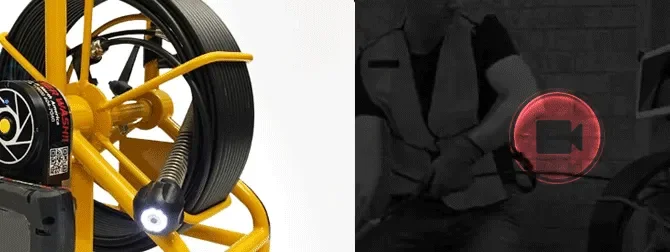
2. Camera introduction. The HD camera on a flexible cable is fed into the drain line. It transmits real-time colour video to a monitor, displaying the distance travelled and pipe orientation.
3. Real-time interpretation. Our technician narrates what they see as the camera moves through the pipe. You watch the monitor with us — there's no mysterious report delivered days later.
4. GPS location marking. When a problem is found, our locator device marks its exact surface position. We physically mark the spot and note the depth for documentation.
5. Video record provided. You receive a copy of the inspection video — useful for your insurer, notary, condo management, or as documentation for a real estate negotiation.
6. Clear recommendation. We tell you exactly what we found, how serious it is, and what the options are — cleaning, high-pressure hydro-jetting, targeted repair, or main drain excavation — with approximate costs for each path.
Montreal Drain Systems — What 15 Years of Camera Inspections Have Taught Us
Montreal's housing stock is unlike most other Canadian cities. Here's what we find consistently inside the drains of the region's homes.
Cast Iron in Pre-1975 Buildings
The duplexes, triplexes, and row houses that define Montreal's older neighbourhoods — Rosemont, the Plateau, NDG, Hochelaga, Verdun, Côte-des-Neiges — were almost universally plumbed with cast iron drain pipes. After 50+ years, the interior condition of these pipes varies enormously depending on the water chemistry they've been exposed to, the original installation quality, and whether they've been maintained. Some are in acceptable condition. Others have walls corroded to a few millimetres of remaining thickness with layers of rust scale coating the interior. The only way to know which situation you're in is the camera.
What we typically see in Montreal's aging cast iron: layered internal corrosion with flaking scale, calcium deposits bonded to the surface, lead joint packing that has shifted at section connections, and in the most deteriorated cases, partial collapse of horizontal drain arms in ceiling cavities.
ABS Pipe in 1980s–2000s Suburban Construction
Homes built during the suburban expansion of Laval, Brossard, Longueuil, Blainville, and other South Shore and North Shore municipalities were predominantly plumbed with ABS plastic. These systems age differently — solvent-welded joints can separate over decades of thermal cycling, and horizontal drain sections under the slab can develop bellies following soil settlement. The camera detects these problems before they cause slab damage or basement flooding.
Condos — Unit Drain vs Shared Stack
In Montreal's condo buildings — throughout Griffintown, Old Montreal, the downtown core — a camera inspection of the unit's individual drain section (upstream of the shared stack connection) is often decisive during a sale. It confirms that the unit's drains are in good condition and that any future problem below the connection point is the building's responsibility, not the unit owner's.
For problems that appear to originate in the shared stack (backups affecting multiple units), we can coordinate with the condo association for access and inspection of the common section.
Clay Pipe in Older Lateral Lines
In some of Montreal's oldest neighbourhoods — and in many South Shore municipalities built before the 1960s — the lateral drain connecting the house to the city sewer under the street was installed in clay tile. Clay pipe has a finite service life and is particularly susceptible to root intrusion, joint separation, and collapse from ground settlement. A camera inspection that reaches the lateral line confirms whether clay is still in place and what condition it's in.
Two uses of the inspection video that many homeowners don't know about:
For your insurer. Some Quebec insurance companies request documentation of drain condition for older homes when renewing coverage or issuing a new policy — particularly for homes requesting sewer backup endorsements. The inspection video provides documented proof of drain condition at a specific date.
For a real estate transaction. Buyers can use inspection findings to justify a price reduction request, with video evidence. Sellers can use a pre-listing inspection to correct problems before they surface during a buyer's inspection — or to sell with full transparency that the drains have been assessed and cleared.
For condo management. The GPS-located video provides condo boards and property managers with precise documentation of where a problem is located within a shared drain system — essential for deciding who bears the repair cost.
Among the top three plumbers according to Three Best Rated
Sample Video Camera Plomberie 5 Étoiles
Why Choose 5 Star Plumbing for Your Drain Camera Inspection
GPS locator integrated as standard. Our camera system includes GPS locator technology that marks the exact surface position of any problem found — not an optional add-on, part of every inspection. This is the difference between knowing there's a problem and knowing exactly where to fix it.
Real-time explanation. Our technician shows and explains what the camera sees during the inspection — you understand your drain's condition before we pack up the equipment.
Video record delivered same day. Usable with your insurer, notary, condo management, or contractor.
We can fix what we find, on the same visit. Unlike inspection-only specialists, our trucks carry the equipment for high-pressure drain cleaning, root removal, and minor repairs. If the problem is correctable the same day, we don't schedule a second trip.
15 years inside Montreal-area drains. We've inspected cast iron pipes in Plateau triplexes, ABS systems in Laval bungalows, clay laterals on the South Shore, and shared stacks in Griffintown condos. We know what we're looking at.
CAA-Québec recommended for 10+ years · 4.8 stars Google · 150+ verified reviews · RBQ #5663-4538-01 · CMMTQ Member
A drain camera inspection allows our technicians to visually examine the inside of your pipes without excavation. It detects blockages, tree root intrusions, cracked or misaligned pipes, and any underground drainage problem — including pipes under concrete and your home's foundation.
A camera inspection is recommended for recurring blockages, slow-draining pipes, persistent bad odors, or before purchasing a home. It is also useful for locating a lost item in the pipes or mapping your underground drainage system.
Yes. We strongly recommend inspecting the main drain before any real estate purchase. Hidden plumbing problems can lead to significant repair costs after the sale. Our inspection report helps you make an informed decision and negotiate the purchase price.
We provide upfront pricing over the phone. Discounted rates are available when the inspection is combined with a drain cleaning service. Call us at 514-447-3700 for a quick estimate.
A drain camera inspection detects tree root intrusions, cracked or broken pipe sections, misaligned joints, debris buildup, crushed pipes, blockages, and whether your home has a backwater valve installed.
Yes. We serve Montreal, Laval, Longueuil, Brossard, Boucherville, Blainville, Terrebonne, Saint-Eustache, and surrounding municipalities. Call 514-447-3700 to confirm availability in your area.
Between 45 minutes and 2 hours for most residential properties, depending on the number of drains inspected and accessibility. Most standard single-drain inspections are completed in under an hour.
In some cases, a pre-cleaning improves image quality — if the drain is heavily obstructed, the camera may not pass the blockage to reach the problem further down the line. We assess on arrival and recommend the right sequence.
Yes. A video file is provided to every client after the inspection — usable with your insurer, notary, condo board, or real estate agent.
We explain the finding, its severity, and the correction options with approximate costs before leaving. If the issue is correctable the same day — cleaning, root removal, minor repair — we can proceed immediately. If more significant work is needed (excavation, pipe replacement), we plan the next steps with you.
Yes, where there's accessible entry — a cleanout or access port. If your home doesn't have an accessible entry point, we'll tell you the options available.
Yes — that's actually when it's most cost-effective. Identifying a deteriorating cast iron section or a growing root intrusion before it causes a backup costs a fraction of what an emergency repair costs. Particularly valuable in homes over 30 years old or when purchasing a property.
In most cases, yes — if there's an exterior cleanout or if the inspection is started from inside and the camera reaches the lateral. We'll confirm what's accessible during the visit.
Yes. The video provides documented proof of the drain condition at the time of inspection. Buyers have used inspection findings to negotiate price reductions with the seller. We can provide a written summary of findings to accompany the video if needed.
 4.8 / 5 Google
 +110 avis verifies